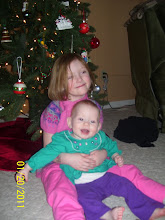
my granddaughters

My photo
Granddaughters Gracie and Lillie at Christmas

Saturday, March 10, 2012

My Family Culture


The three items I would bring with me that represent my family culture would be my bible, a DVD full of pictures of my family, and a package of mixed garden seeds. My bible is the foundation of my family, my husband and I have built our lives around the belief held within its content.   It is our guide to daily living and is a source of strength that has helped us through tough times and given us inspiration.  The DVD is memories of our own childhood and the important people we have in our lives, as well as our children and grandchildren, it would be a way to remember those we love whom we cannot be with.  The seeds are a representation of my past and present, I love to garden and once upon a time it is what kept food on our table during the tough times in our lives.  Gardening is a passion I have passed down to my daughters.  They both love to garden and harvest fresh vegetables and fruit.

As I thought about only being allowed to keep one item, it really was not that difficult.  At first I struggled thinking how sad it would be not to have two items but I knew two items would remain in my heart and two could be replaced.  For example the DVD pictures cannot be replaced, but I have the memories in my heart and mind.  The bible and seeds can be replaced, but my bible has dates about important events in my life and the lives of our children.  I could write them down somewhere and when I got to the place I would be staying find a place to put them. 

I think the greatest struggle was between my bible and the DVD, because would if I couldn’t replace my bible or would if the country didn’t allow bibles within the country how would I handle this, I already know I would find a way to smuggle it in.  In the end I realized I would choose my bible because it is the greatest evidence of my family culture.  Everything else is materials that would not go beyond this earth and they pale in comparison to my faith.

This exercise really made me think about my family culture and frankly I struggled trying to figure out what I would bring because I don’t really think about my family in this way.  So I needed to really evaluate my family and what it is about them that means the most and what makes us a family that we all feel vested in.  What I didn’t realize was that I take my religious freedom for granted, and when I started to think about scenarios that could happen I realized just how important my faith is to me and my husband. We both talked about this assignment and agreed we would risk our lives to keep our bibles and faith with us. It was quiet sobering to consider.


My Family Culture


The three items I would bring with me that represent my family culture would be my bible, a DVD full of pictures of my family, and a package of mixed garden seeds. My bible is the foundation of my family, my husband and I have built our lives around the belief held within its content.   It is our guide to daily living and is a source of strength that has helped us through tough times and given us inspiration.  The DVD is memories of our own childhood and the important people we have in our lives, as well as our children and grandchildren, it would be a way to remember those we love whom we cannot be with.  The seeds are a representation of my past and present, I love to garden and once upon a time it is what kept food on our table during the tough times in our lives.  Gardening is a passion I have passed down to my daughters.  They both love to garden and harvest fresh vegetables and fruit.

As I thought about only being allowed to keep one item, it really was not that difficult.  At first I struggled thinking how sad it would be not to have two items but I knew two items would remain in my heart and two could be replaced.  For example the DVD pictures cannot be replaced, but I have the memories in my heart and mind.  The bible and seeds can be replaced, but my bible has dates about important events in my life and the lives of our children.  I could write them down somewhere and when I got to the place I would be staying find a place to put them. 

I think the greatest struggle was between my bible and the DVD, because would if I couldn’t replace my bible or would if the country didn’t allow bibles within the country how would I handle this, I already know I would find a way to smuggle it in.  In the end I realized I would choose my bible because it is the greatest evidence of my family culture.  Everything else is materials that would not go beyond this earth and they pale in comparison to my faith.

This exercise really made me think about my family culture and frankly I struggled trying to figure out what I would bring because I don’t really think about my family in this way.  So I needed to really evaluate my family and what it is about them that means the most and what makes us a family that we all feel vested in.  What I didn’t realize was that I take my religious freedom for granted, and when I started to think about scenarios that could happen I realized just how important my faith is to me and my husband. We both talked about this assignment and agreed we would risk our lives to keep our bibles and faith with us. It was quiet sobering to consider.


Saturday, February 25, 2012

When I think of Research.....


This picture reminds me of how I feel about my journey through the research process.  At the start of the course I found myself feeling completely under the dark clouds and kind of worried that it might be a storm I would have to weather through.  But after a few weeks I begin to see how  the design of the research process comes together and I found myself feeling the dark clouds clearing, and eventually the past few two weeks let me see how the process can become a reality and I felt the rays of sun starting to come through the clouds.

I want to first take this opportunity to thank all of you for your input into my learning process about research, I truly felt supported by many of you.  I started this journey feeling completely out of my element and my perspective of research was that “this is for someone else” mostly because I could not see myself as a competent researcher.  Thanks to this course and many of you, I feel I am better equipped to at least consider an attempt at conducting research.   

                During this process I have learned how important it is to create a research question that is researchable.  Learning how to create the question or hypothesis to meet the needs of the design and how to adjust the question depending on what design you choose was something I had no idea was necessary.  There are so many things to consider when designing a study.  I found myself realizing why research requires so much time and knowledge of the subject. 

                I think my greatest challenge was grasping the qualitative method and how to create a design that would meet the requirements of this method.  Once a got the main focus of this method it was easier to apply. I read the chapter in the book over and over and the case studies that used this method to help me understand how the qualitative method could work in my study. 

                As an early childhood professional I have used evidence based research to increase my own personal knowledge and I also shared it with colleagues.  I now look at the research through a refined lens that sees more than I did before, not just the results of the research, but I can pick up on the design and methods used. 
               I wish all of you the best on your Masters journey, and hope you all have great learning experiences, maybe we shall meet again.


Saturday, February 4, 2012


Research Around The World


I went into the Early Childhood Australia website and went into resource themes and found The Early Years learning Framework (EYLF) it is the first early years framework endorsed by the Council of Australia Governments.  I found myself drawn into finding out more about it so I went to the table of contents where you can find  5 principles  each focusing on  what we consider effective and quality programming.  It also lists Practice and discusses topics such as responsiveness to children, learning through play, Holistic approaches, cultural competency, continuity of learning and transitions, and assessment for learning.  The third section focuses on the learning outcomes which are sectioned into five outcomes for children.  I have become completely absorb in this area and find myself going through the practice section to learn more about how they feel practices should be reflected in the classrooms. The Holistic  approaches discusses effective practice through play and pedagogy , and a section called swings and rounabouts with an emphasis on giving children a voice and listening to parents to learn about them and their children.  The responsiveness to children focuses on scaffolding instruction and the research on how children learn to talk and the importance of talking to babies and the direct link to children’s speech.  Learning through play reports on the importance of play for children to develop in all the areas of development. The practice of intentional teaching has links to how to provide high-quality teaching through sustained shared thinking and persistence to help children learn and explore. The learning environment discusses how to create environments that promote quality.

Each practice offers articles related to the topic and a list of books that can be purchased that also relate to the topic.  I clicked on nurturing persistence in young children and the link took me to an article on the Zero to Three web site.   I also clicked on How do we support children’s sustained shared thinking? and the article gave great strategies for staff to use when they are engaging in conversation. The article gives open ended question starters which are called positive questioning.  It also connects to the High/Scope curriculum.

I find this information useful for me currently because as a mentor/coach I am always looking for information to help teachers become effective within their classrooms.  One of the hardest things I have found is helping teachers find ways to maintain conversations with children instead of asking questions that close the conversations.  I plan on passing this information on to a few teachers who struggle with asking questions to learn what children are doing and learning. As for my research this information would be useful for mentors when working with mentees, it is great literature to add as a tool in my research simulation.

Saturday, January 14, 2012

My personal Research Journey


I have struggled with deciding what topic to use for my simulation.  As I read through chapter 2 of our text I realized I needed to know the literature that is out there for specific topics in order to find questions that are workable  I also realized I often am asking questions that I need to find research on, not necessary create research about.   As I thought about things I am interested in  I found myself  always coming back to the equality in professional development for early childhood teachers.  What makes a quality early childhood teacher?  How can peer mentor/coaches be effective? What policies can improve equality among all teachers?  I then asked myself if these questions have been answered or are they to complex or broad. 

As my peers I was wondering if these questions would be something you would want to know about, or what questions about equality would you like to find out?  Do you think these questions are worth investigating, to broad, or complex?   

My struggle continues…….   I think the most important question I have is how effective mentor coaches can be for the professional development of teachers, what are the factors that make mentoring effective?  As we continue this process of learning about research I am hoping it hones my skills in finding the right questions to ask. The text is very clear that this is the most important step in the research process.  The text book “Doing Early Childhood Research,” says, “We cannot stress enough that it is worth spending time finding workable, appropriate questions,…..Your research question will influence what you research, how you research it and what you find out from your research efforts (p.23).”

As I was working on my application part 2, I found Proquest offered me more articles about mentoring than the Academic complete database.  Did anyone find one more successful than another?

This course is surely stretching my learning in an area I do not feel confident in.

Friday, December 23, 2011

Learning about the international early childhood field


I think the biggest thing I learned that covers a multitude of learning consequences is  what each country or group of people need in terms of education.  What we consider important for our children to learn is very different than what another country needs their children to learn.  In some areas they  are working toward policies that will offer children and education through the primary grades. In other countries it is teaching sanitation for survival and increase the mortality rate for children birth -5 years old.  In other countries it is defining what a quality education is for all.  One thing we all have in common is the passion to serve our youngest children, and find ways to improve their lives.

                The idea of working with the whole family will always be my number one passion, so when listened to the podcast with Chevighy and Morgan, they discussed providing integrated packages to families in which they would receive medicine, vaccinations, advice, and an outreach to the community from the clinics and outposts to network services.  I right away went to my husband and asked when he wanted to plan our next mission trip, because I am ready to become part of this package and offer whatever services I can.  I guess you could call this my goal or mission (either way) I just know children around this world need hope and I would like to give some.


Reference

Chevighy, B. (Director), & Morgan, R. (Performer) (2010, September 12). Equity in child survival: An opportunity to do things better. UNICEF. [Audio podcast]. Retrieved from http://itunes.apple.com/podcast/unidef-podcast/id77700259