my granddaughters

My photo
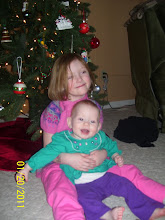
Granddaughters Gracie and Lillie at Christmas

Tuesday, April 17, 2012

My Hope


My hope is that I will always work toward meeting the needs of every family and child I encounter in my professional and personal life. I hope I will treat them with respect and dignity and provide an environment where they feel completely inclusive and wholly excepted for who they are, and where they come from.  I hope I will have the humility to realize I do not have all the answers, but willing to learn.

My goal for the Early Childhood field is that we will focus on preparing teachers for their work in classrooms where diversity is as much a part of the curriculum as learning academics.  It is the social and emotional cornerstone for making change happen.  Teachers who are currently in the field will be provided trainings and workshops that will teach them how to implement anti – bias curriculum and the importance of providing equity within the classrooms for all children.

This course has been a great opportunity for me to reflect upon topics I might never have, and I want to thank all of my colleagues for the great interactions that have helped me grow.  I wish you all the best as we enter into our last class and then on to our specializations. My wish for you is to grow in your knowledge and passion that will build a better tomorrow for the children of today.

And a thank you to Dr. Morgan for your guidance and support as you worked us through topics that can be hard to understand.


Saturday, April 14, 2012

Welcoming Families From Around the World


Map of Tajikistan


My family is has come from the country of Tajikistan, from the Garm clan located in the Gorno- Badakhshan Autonomous Province.

Finding out what region and clan my family is from was the most important step in understanding who they are.   

Second, I needed to make sure I understood their beliefs, cultural heritage, family system, acceptable foods, language, customs, and their ceremonial occasions.  I also needed to understand their expectations for their son or daughter that would be in our program.  I need to understand the gender roles within the family system.

What I found out that I need to make myself cultural responsive is ;

1.  Men never enter a home where there are only women, and girls are never left alone with boys. Men and women separate during social gatherings, and everyone stands when another guest arrives.  When shaking hands in greeting, it is respectful to place your left hand over your heart and bow slightly.

My responsibility is to make sure on a visit I either bring a male with me, or make sure the wife and husband are home together when meeting them. 

2. Their language is Ismaili Shiite and is a sect of Islam.  I will need to learn the basic survival words and greetings that will help me connect with the family.  I will also have the language written and put in areas around the classroom to make sure the family can read and know what our program is about.  All information will be translated into their language, and if an interpreter will be available for us to communicate. 

3. I found out that the family does not eat pork, therefore our program will eliminate any pork from the menu, and bread will be served at every meal. 

4.  Education is not a priority for most families, they want their sons to get an education, but learning to care for the family comes first.  Girls are seldom sent to school, they  are trained at home to become marketable for marriage. 

As I meet with the parents I will engage in a conversation that will help me understand what the family wants for their children, and give them information about our program and what we offer.  Because in America school is required for all family members, it is important to help them understand how they can educate both their son and daughters here.  Maybe they will want to home school their daughters while following their traditions.

5. They wear amulets to protect themselves from evil, and a protection from the supernatural forces that affect daily life.  It is essential to allow them to wear an amulet in class, and to prepare our class I would ask the family if they would like to speak to the children about their traditions and clothing to help others understand the importance it has for them.  

6. Some of the rituals this family may follow are periods of fasting, Ramadan, and ceremonies.  Knowing a child might be fasting within the classroom hours is critical in not violating the child, allowing them not to eat is very important.  Also, as families engage in ceremonies it is important to know why a child is not in school, and give the parents  support in by letting them know it is ok.

By understanding the culture of my family, it will help me prepare for meeting them, and greeting them with respect and a general understanding.  The use of an interpreter will help us begin building a relationship of understanding and provide for their needs.  Learning about their country and the cultural traditions and expectations will help eliminate misunderstandings that might otherwise have occurred.

 A man stands in the doorway of a yurt in a desolate area in the western Pamirs.
A man stands in the doorway of a yurt in a desolate area in the western Pamirs.

Read more: Culture of Tajikistan - history, people, clothing, traditions, women, beliefs, food, customs, family http://www.everyculture.com/Sa-Th/Tajikistan.html#ixzz1s2NzjBzY
Saturday, April 7, 2012

The Personal Side of Bias, Prejudice, and Oppression


Two families both are going to a family event that has booths where you can play games with your child, or get information about programs and activities within the community.  The families both need a sign language interpreter, at a meeting the facilitator of the event says, ‘Can’t we just get one interpreter, and they can go around the booths together?”

This facilitator was not intentional with his microaggression towards the two families, but none the less what he was suggesting was segregation based off need of two families.  The inequality he expressed was that they would have to go to the booths together, he was taking away their freedom to choose what booth they could both start with, and move to throughout the event. 

My first reaction was more internal, a sense of disbelief that he would think this was an ok solution. I then ran the gamut of frustration, anger, even resentment toward him that he could think this way.

I immediately spoke out about the issue and gave an explanation that each family had a personal right to have their own interpreter and move freely through the event just like everyone else.  I shared my thoughts on segregation and the insult this action would place upon the family. 

Friday, March 23, 2012

Practicing Awareness of Microaggressions


I want to share a story of an incident the occurred recently between me and a teacher.  This story is about a child and his mother who are in our program.  I have changed the names of the parent, teacher and child, but it is an example of how microaggression can cause harm to a child and the parent.  When we are unaware  we can cause low self- esteem and a struggle to cope with life in a time when life is already hard.


A story of microinsult

Johnny often comes to school with a scowl on his face and more often now mom does not look at the teachers and is always in a hurry to sign her child in and get out.  Johnny is currently on an IEP for behavioral issues, cognitive delays and fine motor delays.   During the classroom hours Johnny often has bursts of anger and needs to be removed before others are hurt.  He often screams and yells profanity at no one in particular.  The teacher has had several meetings with mom (who I will call Trish), and the special Education teachers.  These meetings often consist of what is happening in the classrooms and discussions of possible solutions.  One day the teacher came to my desk and said, “I just don’t know what to do anymore, Trish brings in Johnny and she won’t look at me she just hurries in and signs him in then leaves, I don’t get a chance to let her know what is going on.”  I asked, “When is the last time you told her something Johnny has been doing that is showing progress or something positive about his personality or behaviors?”  The teacher gave me a blank stare and said, “Well if she would stick around maybe I could, she just doesn’t care.” the teacher continued on with comments about mom only thinks about herself, and the last was “Johnny is never going to make it, if I can’t get mom to get on board.” I asked why she thought he would never make it and she responded that it’s just the way he is, and he is never going to change living the way they do.  I proceeded to ask the teacher what she knew about Johnny and Trish’s life.  The teacher responded that when mom was pregnant with Johnny’s little sister, her husband was in a bad car accident and is now in a nursing home where he will remain due to brain injuries and other things.  I asked what else do you know? ……. no response. I proceeded to let her know that Dad was the main care giver of the children; he was a stay at home dad and mom worked outside the home.  Since his accident she has taken on both parenting figures, not to mention she has had some mental health issues of her own, and has been struggling with anxiety and stress.  The teacher looked shocked at me and said, “No wonder he has so many issues, they are a mess.”

The attitude of this teacher and her image of the family portrayed microinsults to the family and their abilities.  While she thought she was being caring and helpful all she managed to do was give the impression to Trish that she was doing a crappy job of raising her son, and he was heading down a road of no return.  I explained to the teacher  that Trish wanted no part in hearing anymore negative about her son, and the relationship between her and Trish was now broken.  Mom needed some affirmation that her son has many good qualities, and she is doing a great job of parenting.  Did the teacher believe this to be true…. I do not know, but she needs to reflect on her personal attitudes and biases about parents with children who have challenging behaviors and help parents find support. 

Thinking about this exchange has my conscious more aware to listen for more of these types of microaggressions. I have printed out the preventions mentioned in the video by Dr. Sue  and plan on sharing them with staff as the need arise.  I have found myself very frustrated with this teacher and her lack of understanding, but it is my duty as a mentor to teach and to come along side staff to help them understand some very important skills and hopefully open up some discussions about our  biases toward others.  I am excited to add this to my “tool belt” of knowledge.

Reference

Laureate Education, Inc. (Producer). (2011). Perspectives on diversity and equity [DVD]. Microaggressions in everyday life. Baltimore, MD: Author.

Saturday, March 17, 2012

Perspectives on Diversity and Culture

Definition 1

Culture is passed down beliefs and activities of a specific people in a given region or area

Diversity is when different ethnic groups and cultures live together in a region or area.

Definition 2

Culture would be the beliefs, traditions, and mannerisms of a particular group, this could be an ethnic

 group, or a social group i.e. deaf culture.

Diversity is having the knowledge of the different cultures and accepting them. It means understanding each individual is unique, and recognizing the differences.

Definition 3

Culture is the lifestyle of your family beliefs

Diversity is the wide range of people we come in contact with on a daily basis.

 Question 1

Which aspects of culture and diversity that I have studied in this course are included in the answers I received – and what are some examples?

Some of the answers that I received that are the same as what we have been studying are that cultures have a common beliefs and mannerisms within a group and a social group.  The definitions I got that match what we have discussed about diversity are the language, and ethnic groups that interact together. 

Question 2

Which aspects have been omitted – what are some examples of such omission?

I do not see much omission but the definitions did not go into great deal about the identities that make each culture diverse.  We have been looking at deep culture  and one definition did discuss individual uniqueness, which is what we must understand of each other. 

Question 3

In what ways has thinking about other people’s definitions of culture and diversity influenced my own thinking about these topics.

When I put this question out there my curiosity peeked, I was excited to see the answers and find out what people I know and care about thought  about diversity and culture.  I realize many people view the definition in a similar way.   It also gives me insight into their personal culture, because their answers are a way of defining themselves.


Saturday, March 10, 2012

My Family Culture


The three items I would bring with me that represent my family culture would be my bible, a DVD full of pictures of my family, and a package of mixed garden seeds. My bible is the foundation of my family, my husband and I have built our lives around the belief held within its content.   It is our guide to daily living and is a source of strength that has helped us through tough times and given us inspiration.  The DVD is memories of our own childhood and the important people we have in our lives, as well as our children and grandchildren, it would be a way to remember those we love whom we cannot be with.  The seeds are a representation of my past and present, I love to garden and once upon a time it is what kept food on our table during the tough times in our lives.  Gardening is a passion I have passed down to my daughters.  They both love to garden and harvest fresh vegetables and fruit.

As I thought about only being allowed to keep one item, it really was not that difficult.  At first I struggled thinking how sad it would be not to have two items but I knew two items would remain in my heart and two could be replaced.  For example the DVD pictures cannot be replaced, but I have the memories in my heart and mind.  The bible and seeds can be replaced, but my bible has dates about important events in my life and the lives of our children.  I could write them down somewhere and when I got to the place I would be staying find a place to put them. 

I think the greatest struggle was between my bible and the DVD, because would if I couldn’t replace my bible or would if the country didn’t allow bibles within the country how would I handle this, I already know I would find a way to smuggle it in.  In the end I realized I would choose my bible because it is the greatest evidence of my family culture.  Everything else is materials that would not go beyond this earth and they pale in comparison to my faith.

This exercise really made me think about my family culture and frankly I struggled trying to figure out what I would bring because I don’t really think about my family in this way.  So I needed to really evaluate my family and what it is about them that means the most and what makes us a family that we all feel vested in.  What I didn’t realize was that I take my religious freedom for granted, and when I started to think about scenarios that could happen I realized just how important my faith is to me and my husband. We both talked about this assignment and agreed we would risk our lives to keep our bibles and faith with us. It was quiet sobering to consider.


My Family Culture


The three items I would bring with me that represent my family culture would be my bible, a DVD full of pictures of my family, and a package of mixed garden seeds. My bible is the foundation of my family, my husband and I have built our lives around the belief held within its content.   It is our guide to daily living and is a source of strength that has helped us through tough times and given us inspiration.  The DVD is memories of our own childhood and the important people we have in our lives, as well as our children and grandchildren, it would be a way to remember those we love whom we cannot be with.  The seeds are a representation of my past and present, I love to garden and once upon a time it is what kept food on our table during the tough times in our lives.  Gardening is a passion I have passed down to my daughters.  They both love to garden and harvest fresh vegetables and fruit.

As I thought about only being allowed to keep one item, it really was not that difficult.  At first I struggled thinking how sad it would be not to have two items but I knew two items would remain in my heart and two could be replaced.  For example the DVD pictures cannot be replaced, but I have the memories in my heart and mind.  The bible and seeds can be replaced, but my bible has dates about important events in my life and the lives of our children.  I could write them down somewhere and when I got to the place I would be staying find a place to put them. 

I think the greatest struggle was between my bible and the DVD, because would if I couldn’t replace my bible or would if the country didn’t allow bibles within the country how would I handle this, I already know I would find a way to smuggle it in.  In the end I realized I would choose my bible because it is the greatest evidence of my family culture.  Everything else is materials that would not go beyond this earth and they pale in comparison to my faith.

This exercise really made me think about my family culture and frankly I struggled trying to figure out what I would bring because I don’t really think about my family in this way.  So I needed to really evaluate my family and what it is about them that means the most and what makes us a family that we all feel vested in.  What I didn’t realize was that I take my religious freedom for granted, and when I started to think about scenarios that could happen I realized just how important my faith is to me and my husband. We both talked about this assignment and agreed we would risk our lives to keep our bibles and faith with us. It was quiet sobering to consider.